
Most traders pick a broker after reading a comparison table, then discover the platform feels wrong only after the first deposit. A demo account solves that, but nearly every broker asks for a phone number before it unlocks one, and comparing five platforms means handing your number to five sales teams. If you are only comparing platforms, an SMS verification service can receive those demo sign-up codes, while your real number goes only to the broker you end up funding. Below is a practical routine for testing platforms properly and keeping your contact details where they belong.
Why a demo account beats a feature list
A feature list tells you what a platform can do. A demo shows you how it behaves in real use. You see how fast orders fill, how charts load on a slow connection and how many taps it takes to set a stop loss on mobile. Those details decide whether you trade calmly or fight the software.
Demo money also removes the pressure that makes people rush. You can place the same strategy on three platforms in the same week and compare the experience side by side, which is impossible once real funds are tied up in one account.
What brokers ask for when you open a demo
Demo registration is lighter than full onboarding, but it still collects personal details. A typical demo form asks for:
- your name and email address;
- a phone number, confirmed with a one-time code;
- your country of residence, which decides the entity and rules you fall under;
- trading experience questions, sometimes before the demo opens.
The phone number is the part that follows you. Brokers use it for account recovery, but also for onboarding calls and promotional messages, and some keep calling long after you have stopped logging in.
Which number to use at each stage
The rule is simple: the more money and identity checks involved, the more permanent the number should be.
| Stage | What happens | Which number |
| Comparing demos | You test 3 to 5 platforms with virtual funds | A virtual number |
| Third-party tools | Trading journals, signal channels, webinars | A virtual number or long-term rental |
| Chosen broker, live account | Identity checks, deposits, two-factor codes | Your own SIM number |
| Withdrawals and security alerts | Codes that protect real money | Your own SIM number, plus an authenticator app |
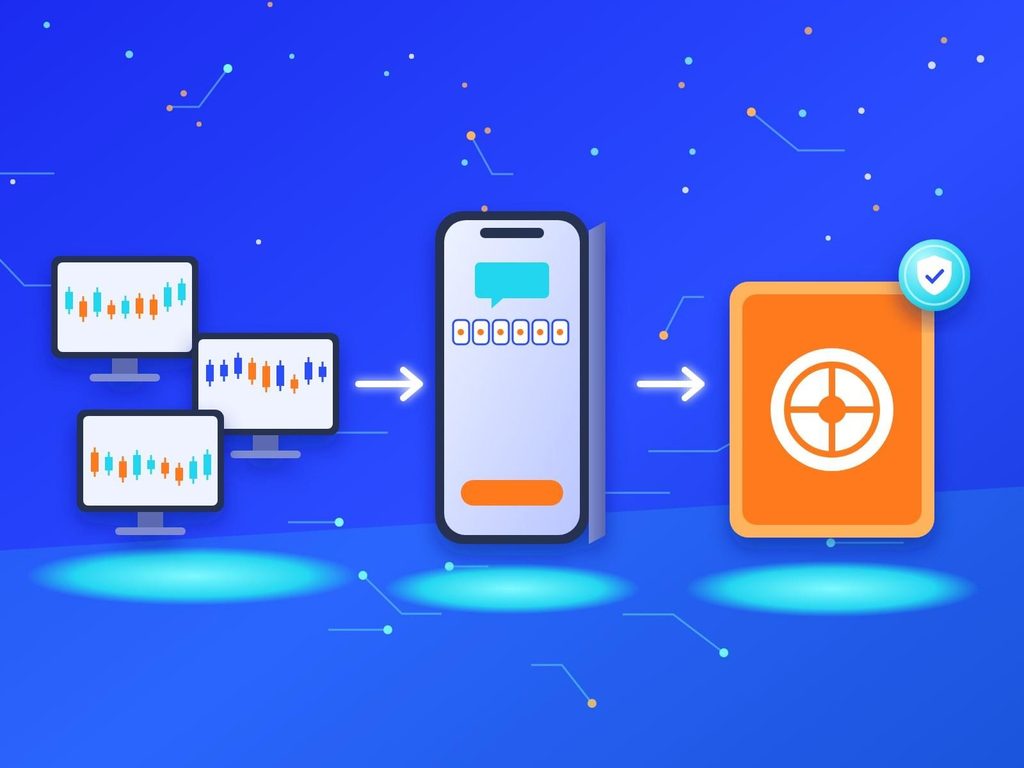
The live account is not the place to experiment. Regulated brokers verify your identity, and a number you cannot reach in six months is a security risk for an account that holds your money.
A five-day demo routine
Testing works best with a fixed plan, so every platform gets the same treatment.
1. Day 1: Open demos on your shortlist and note how long each sign-up takes and what it asks for.
2. Day 2: Rebuild your usual chart layout and indicators on each platform.
3. Day 3: Place, modify and close the same test trades, including stop loss and take profit orders.
4. Day 4: Repeat day 3 on the mobile apps, on mobile data rather than Wi-Fi.
5. Day 5: Compare notes, keep one platform, and close or ignore the rest.
If a demo number came from a virtual service, an activation number is enough for this week. Services such as SMSFAST offer numbers from 190+ countries, which helps when a broker only accepts numbers from your country of residence.
Keep a simple log of what you opened
Five demos in a week is easy to lose track of. A short log saves time later and makes it easy to close what you do not need:
| Broker | Platform | Number used | Opened | Status |
| Broker A | MetaTrader 5 | Virtual, activation | Monday | Closed |
| Broker B | Proprietary web app | Virtual, activation | Monday | Shortlisted |
| Broker C | MetaTrader 4 | Virtual, activation | Tuesday | Closed |
When a shortlisted broker becomes your main one, open the live account fresh with your own number rather than upgrading the demo profile.
What to check besides the charts
Platform comfort matters, but so does the rulebook the broker plays by. In the European Union, ESMA (the European Securities and Markets Authority) announced product intervention measures for retail CFD trading on March 27, 2018. They cap leverage at 30:1 for major currency pairs and 2:1 for cryptocurrencies, and they require a standardized risk warning showing the percentage of the provider’s retail accounts that lose money.
Use that as a checklist while your demo is open:
- Leverage settings that match the limits for your region, not a suspicious “1:1000” banner;
- Risk warning with a specific percentage, shown on the site and in the app;
- Negative balance protection, so losses cannot exceed the money in your account;
- Margin close-out level, which ESMA set at 50% of required margin for retail clients;
- Licence details you can look up on the regulator’s own register.
A demo that looks perfect but hides these details is a reason to keep looking.
When the trial ends
Once you have chosen a broker, register the live account with your own number from the start, and enable an authenticator app as soon as the platform allows it. Do not move a demo profile that was opened with a temporary number into live trading, because the recovery channel would expire with the number.
Some brokers also detect virtual numbers and refuse them even at the demo stage. If that happens, the broker is telling you it wants a stable contact, so decide whether that platform is worth sharing your real number before you test it.
The bottom line
A week of structured demo testing tells you more about a broker than any review. Keep the comparison stage light: a virtual number for demos and tools, notes on every platform, and a regulatory checklist. Save your permanent number, identity documents and two-factor codes for the one broker that earns your deposit.